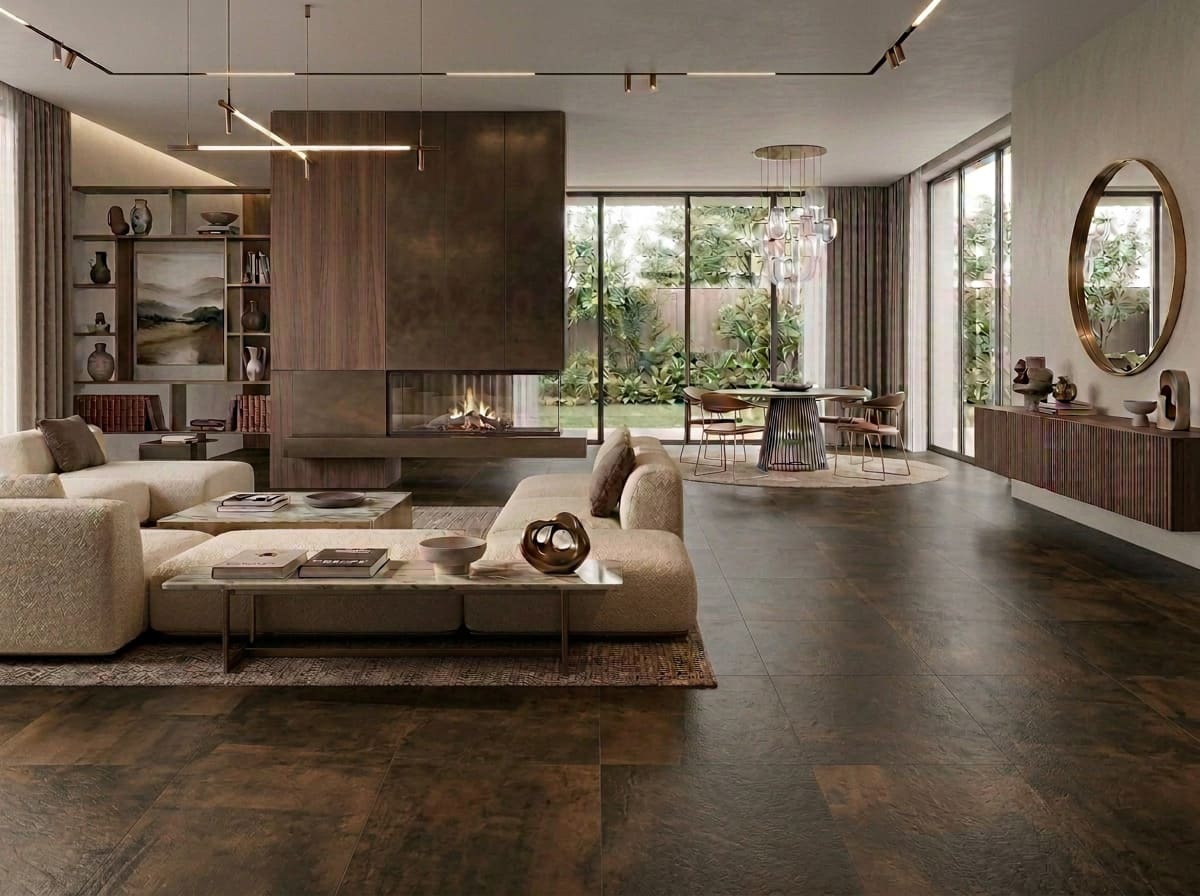
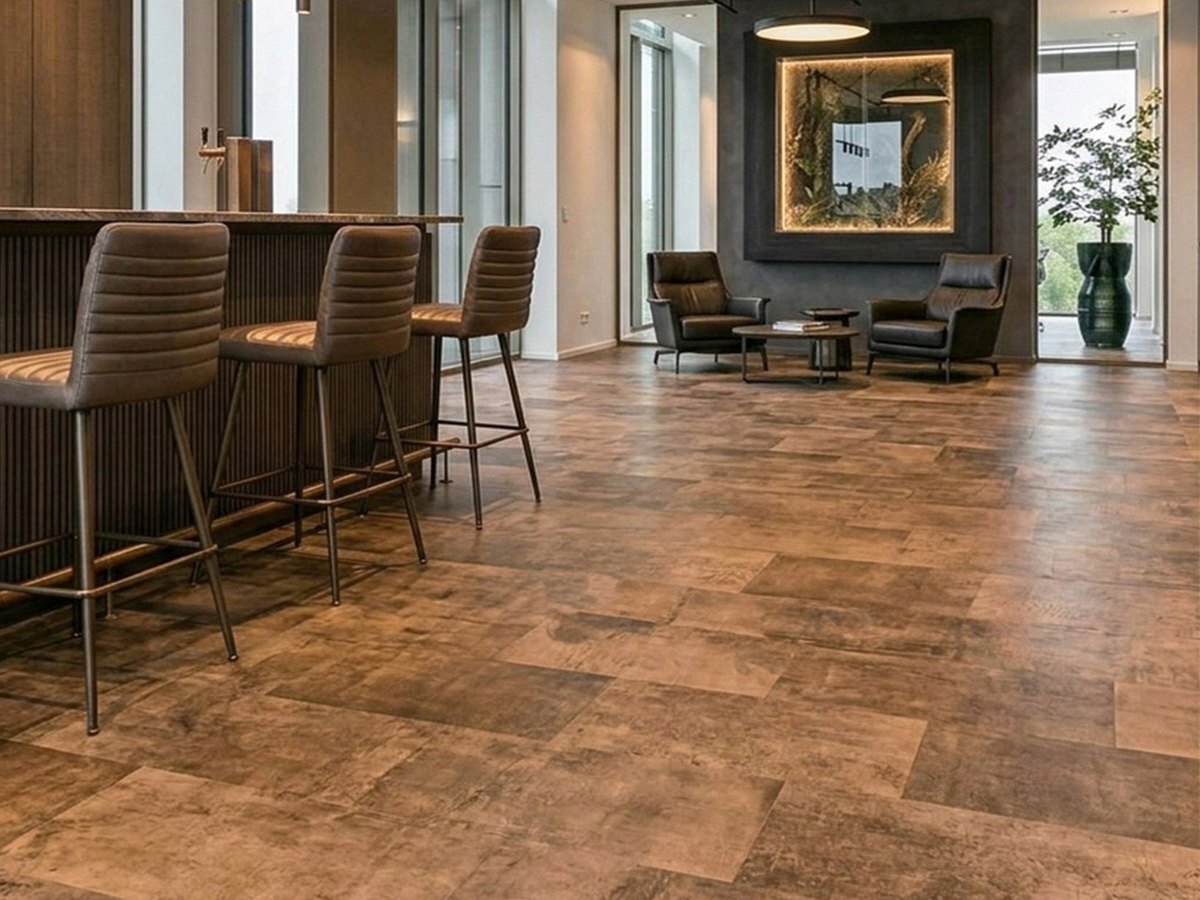

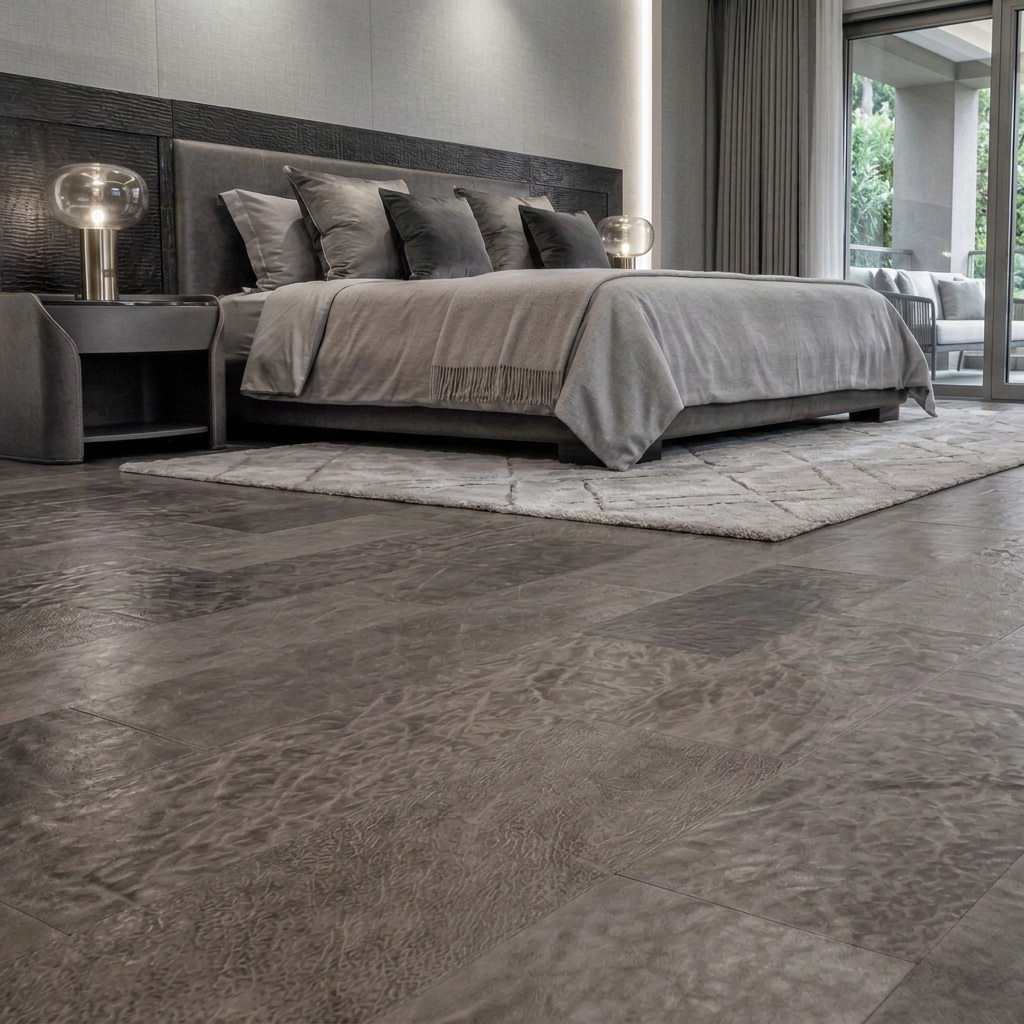
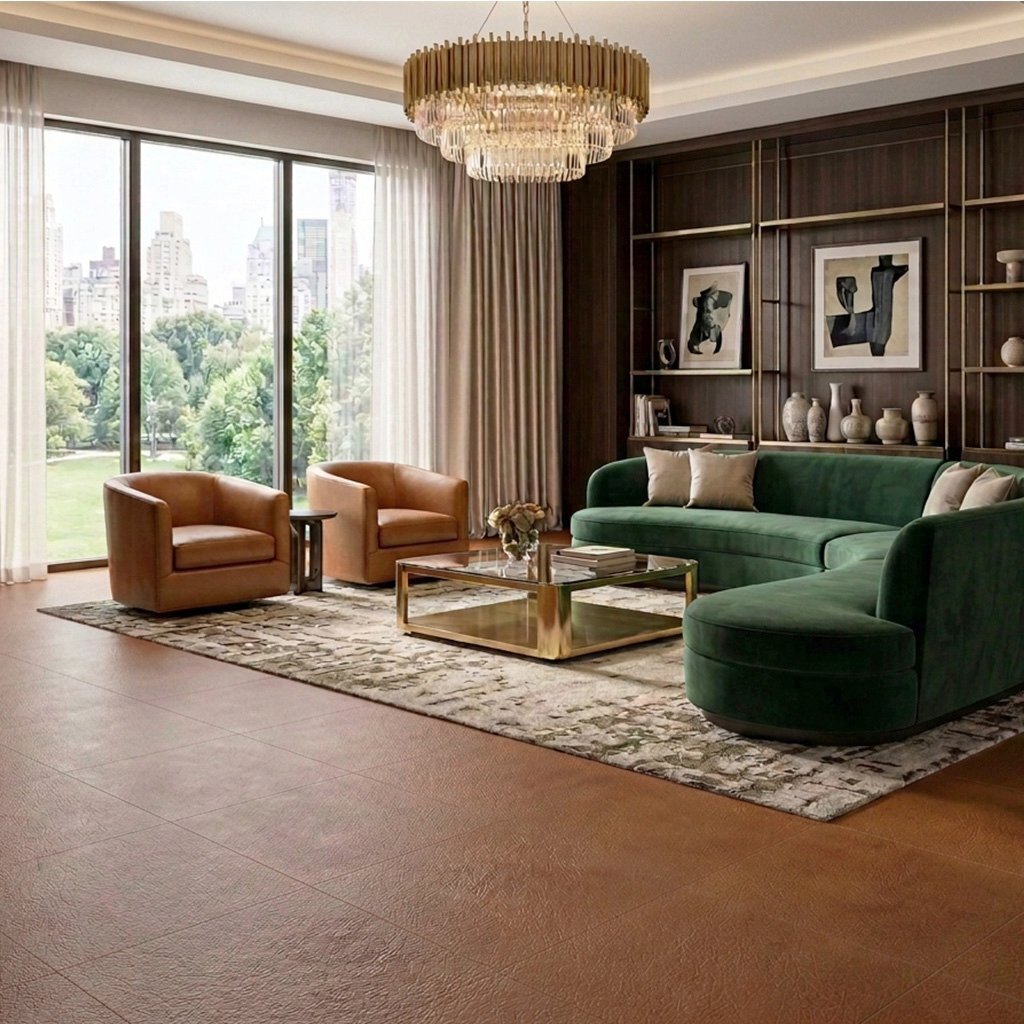
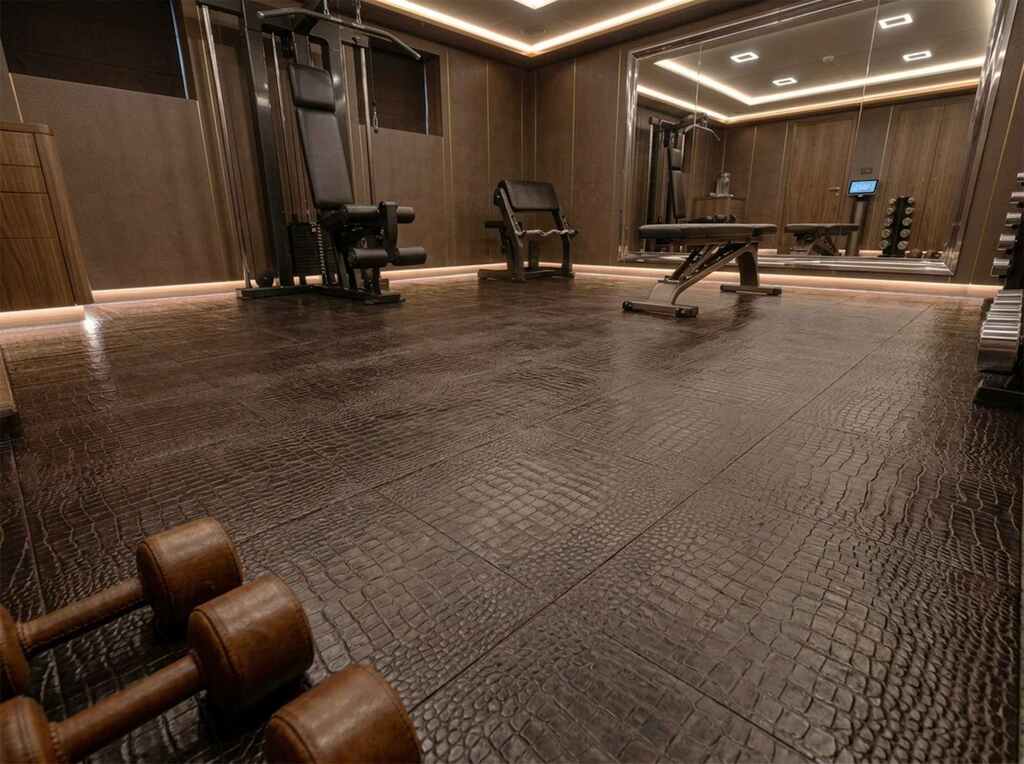
A leather floor is a flooring surface made from real leather, supplied as leather tiles, planks, or large-format cuts and bonded across the full area of the substrate. In place of parquet, vinyl, or carpet, the result is a warm, soft surface with a texture no other material matches — and because every hide has its own grain, no two areas look the same.
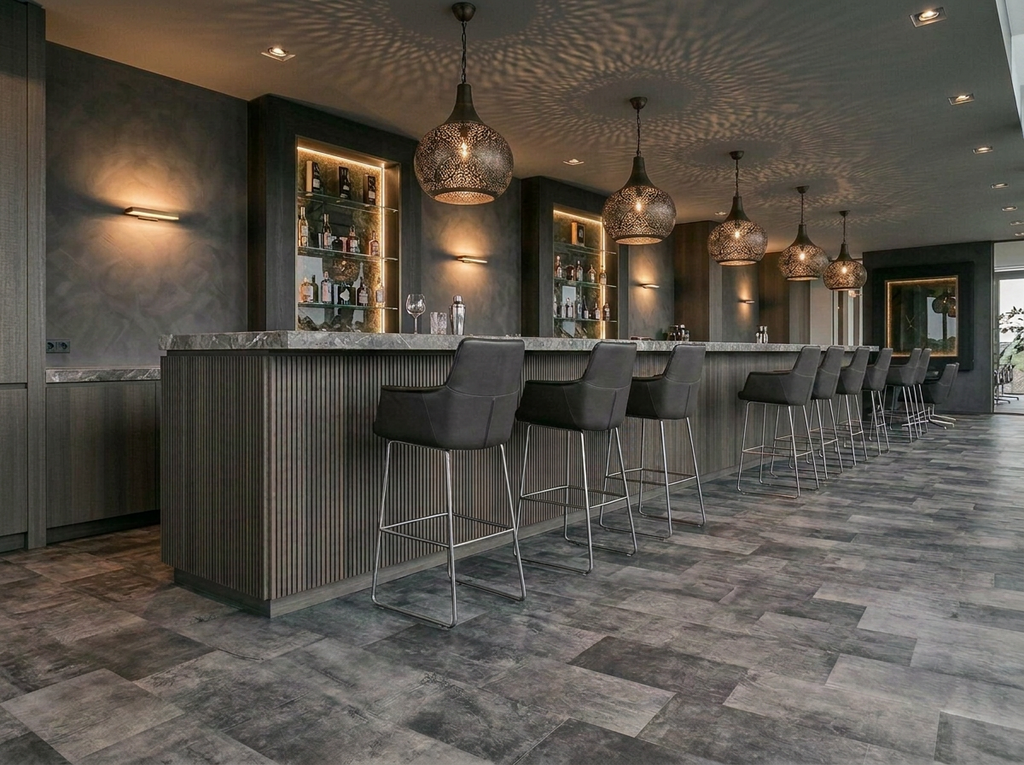
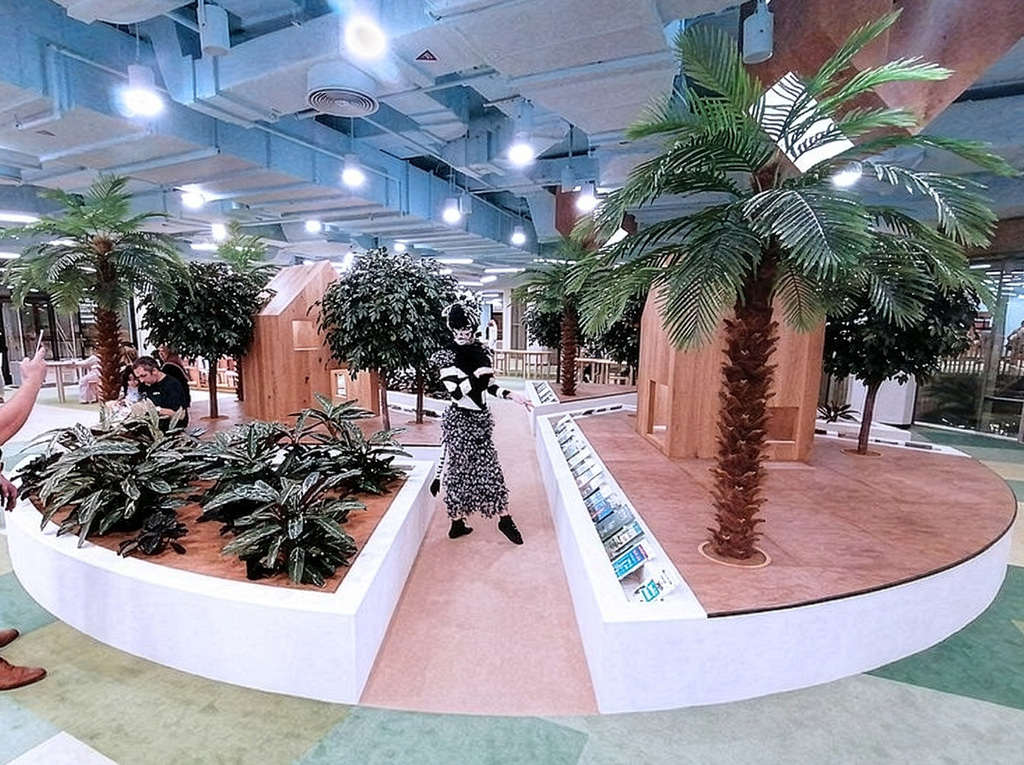
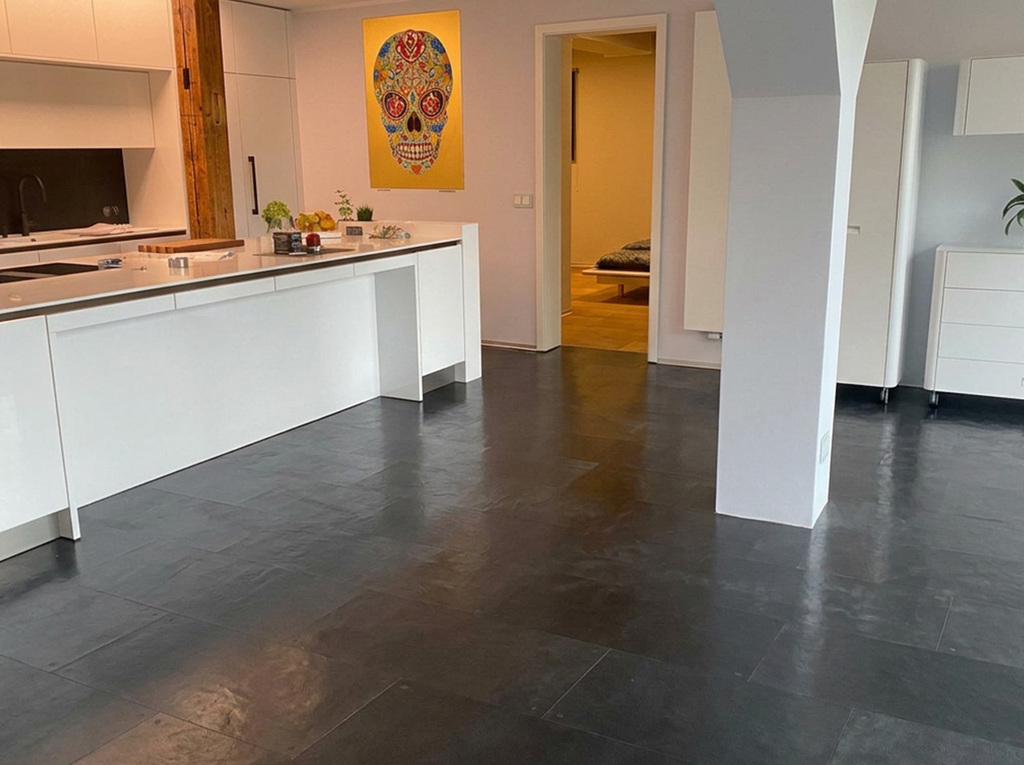
Where Leather Floors Work
What Are the Advantages of a Leather Floor?
| Property | Effect |
|---|---|
| Look and feel | A warm, living surface that develops its own patina as it is walked on |
| Warmth underfoot | Noticeably warmer than stone, tile, or vinyl — comfortable barefoot |
| Acoustics | Reduces impact sound and makes a room audibly calmer |
| Durability | Hard-wearing and, with proper care, good for decades |
| Individuality | A wide choice of leathers, colors, formats, and laying patterns |
Can a Leather Floor Be Used With Underfloor Heating?
Yes. Leather tiles are thin and bonded across the full area, so they pass heat into the room efficiently. What matters is a slow, evenly controlled flow temperature and staying within the surface temperature specified by the manufacturer — as a rule, the limit is around 27 °C (81 °F). Higher temperatures or rapid temperature changes draw moisture out of the leather and can cause it to shrink.
How Delicate Is Leather as a Floor Covering?
Leather is far more robust than most people expect — it is tanned and compacted specifically for floor use. Signs of use are part of its character, though: walked areas darken over time and develop a patina, much like a good leather bag. If you want a floor that stays perfectly uniform, leather is the wrong choice. If you value surfaces that live and change, that is exactly what you gain.
Leather Is Less Suitable Where There Is
What Should Be Considered During Installation?
For decorators, interior designers, architects, and specialist contractors, preparation decides the result. Five points matter most:
How Is a Leather Floor Cared For?
Day to day, sweeping or vacuuming with a soft brush head is enough, along with damp mopping that leaves no standing water. Aggressive cleaners, steam cleaners, and abrasives must be avoided. Every two to three years, the floor is treated with a suitable leather balm or wax — this maintains suppleness, depth of color, and the protective layer. Felt pads under furniture and entrance matting at doorways are recommended.
Can Damage Be Repaired?
Yes — and this is a real advantage over many other floor coverings. Light scratches usually disappear with re-oiling and gentle buffing. Deeper damage or staining can be dealt with by lifting individual tiles and replacing them. It is worth keeping a few tiles from the same batch in reserve at the time of installation, so that color and grain still match later on.
How Long Does a Leather Floor Last?
With proper installation and regular care, a service life of several decades is realistic. Unlike many floor coverings, leather does not simply wear down as it ages — it matures. The floor gains depth and character rather than losing value.
In Summary
Leather floors bring together timeless design, skilled craftsmanship, and a surface you can see and feel. For architects, interior designers, decorators, and specialist contractors, they offer a way to deliver a made-to-order result — from material advice through installation to long-term care.