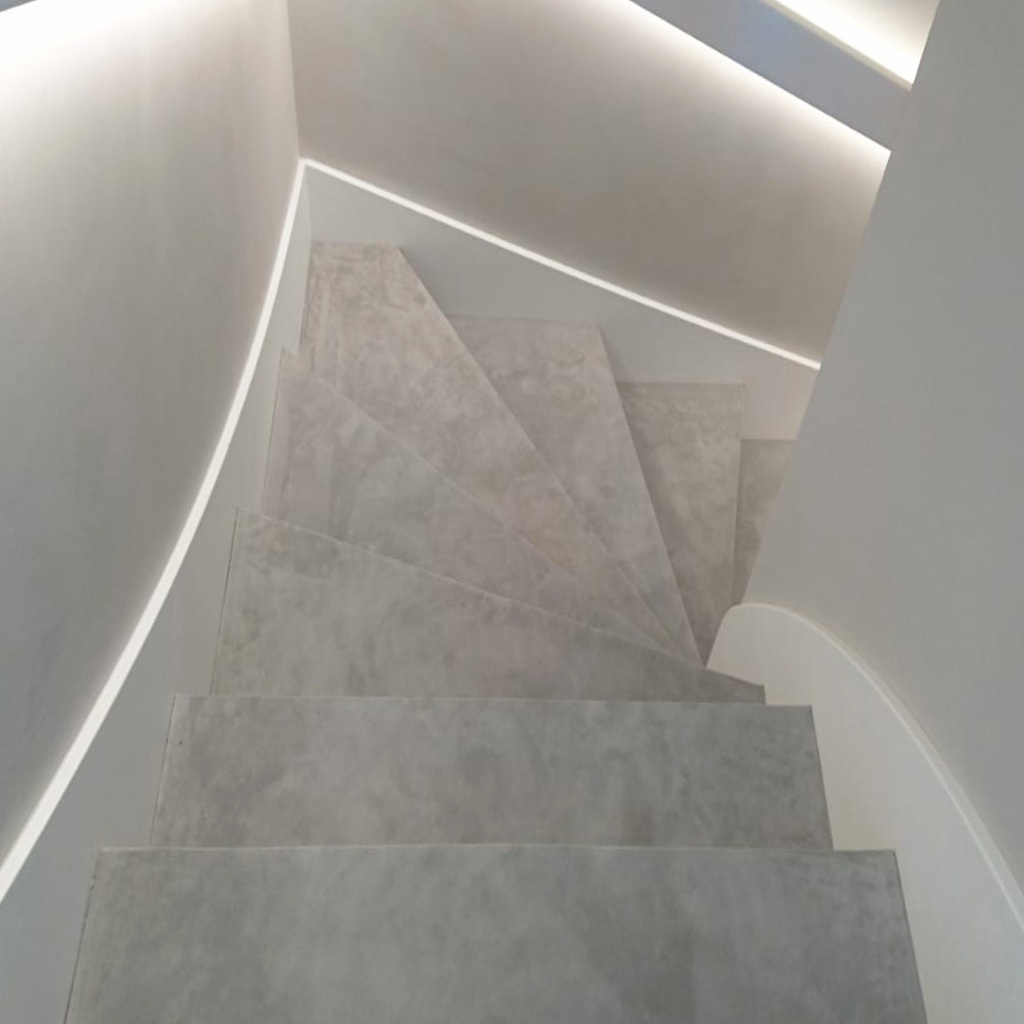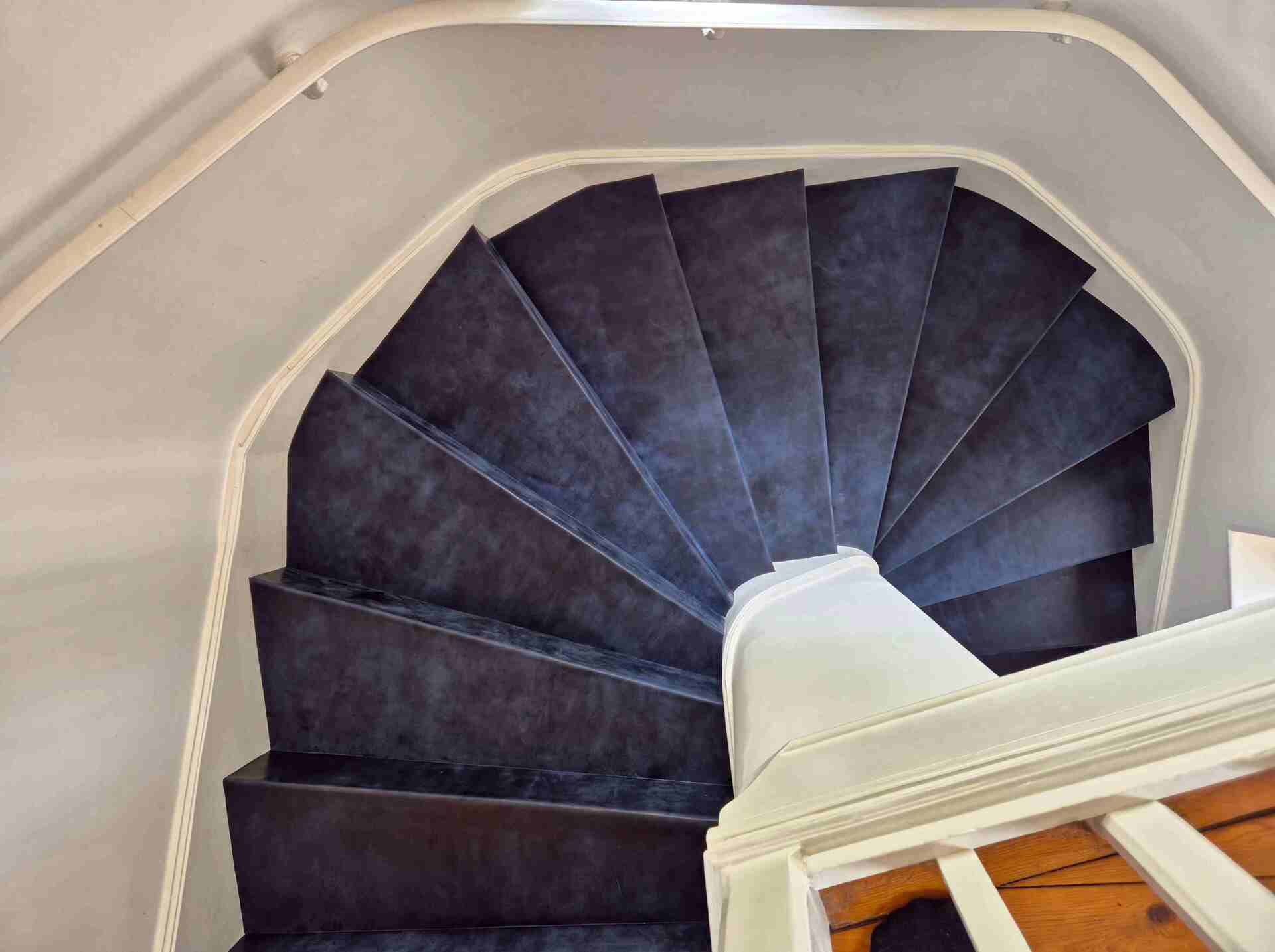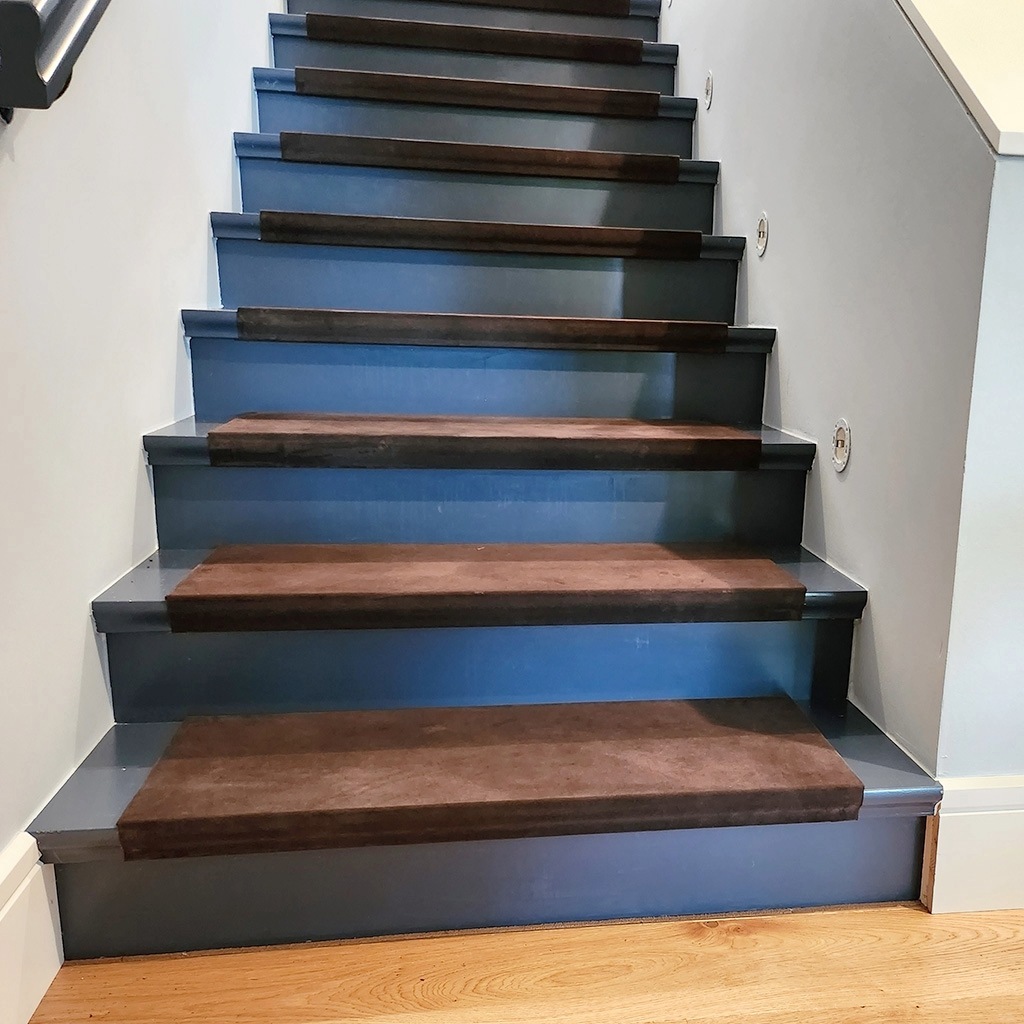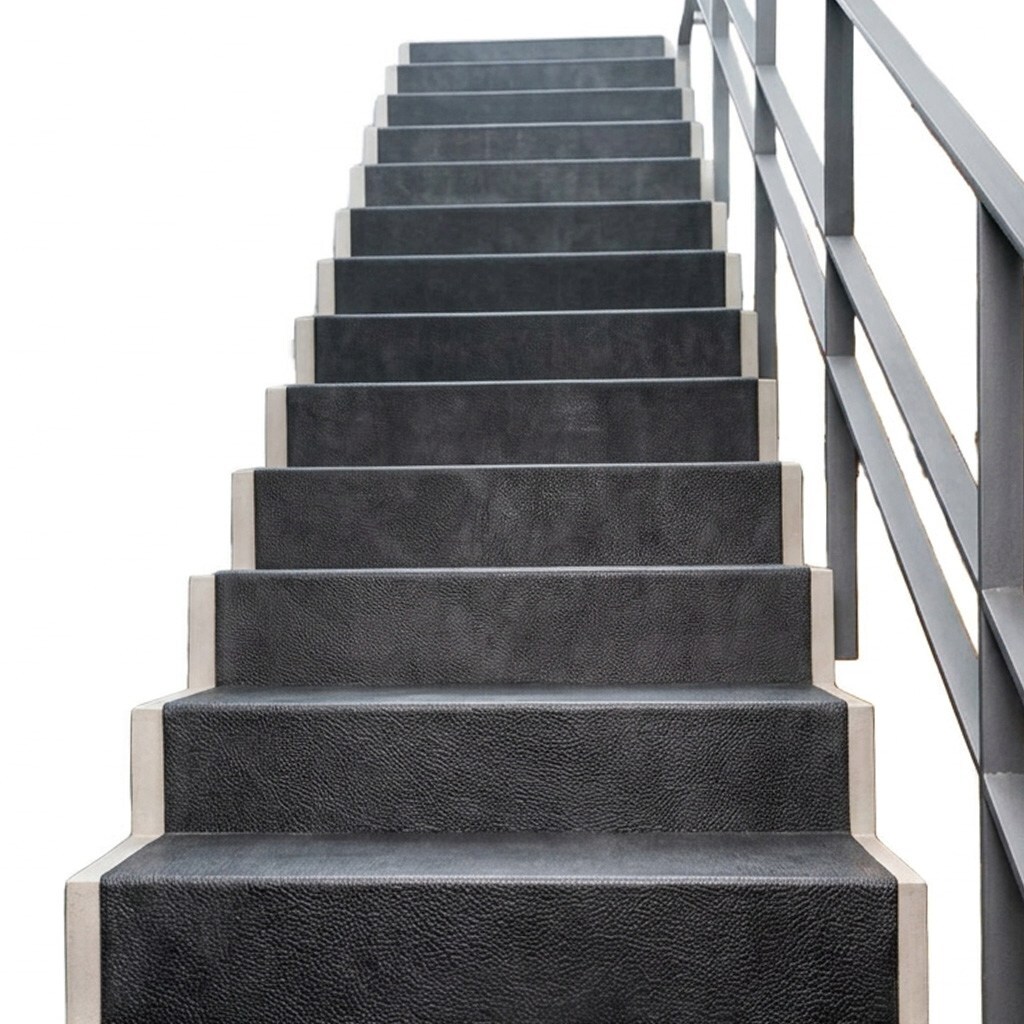
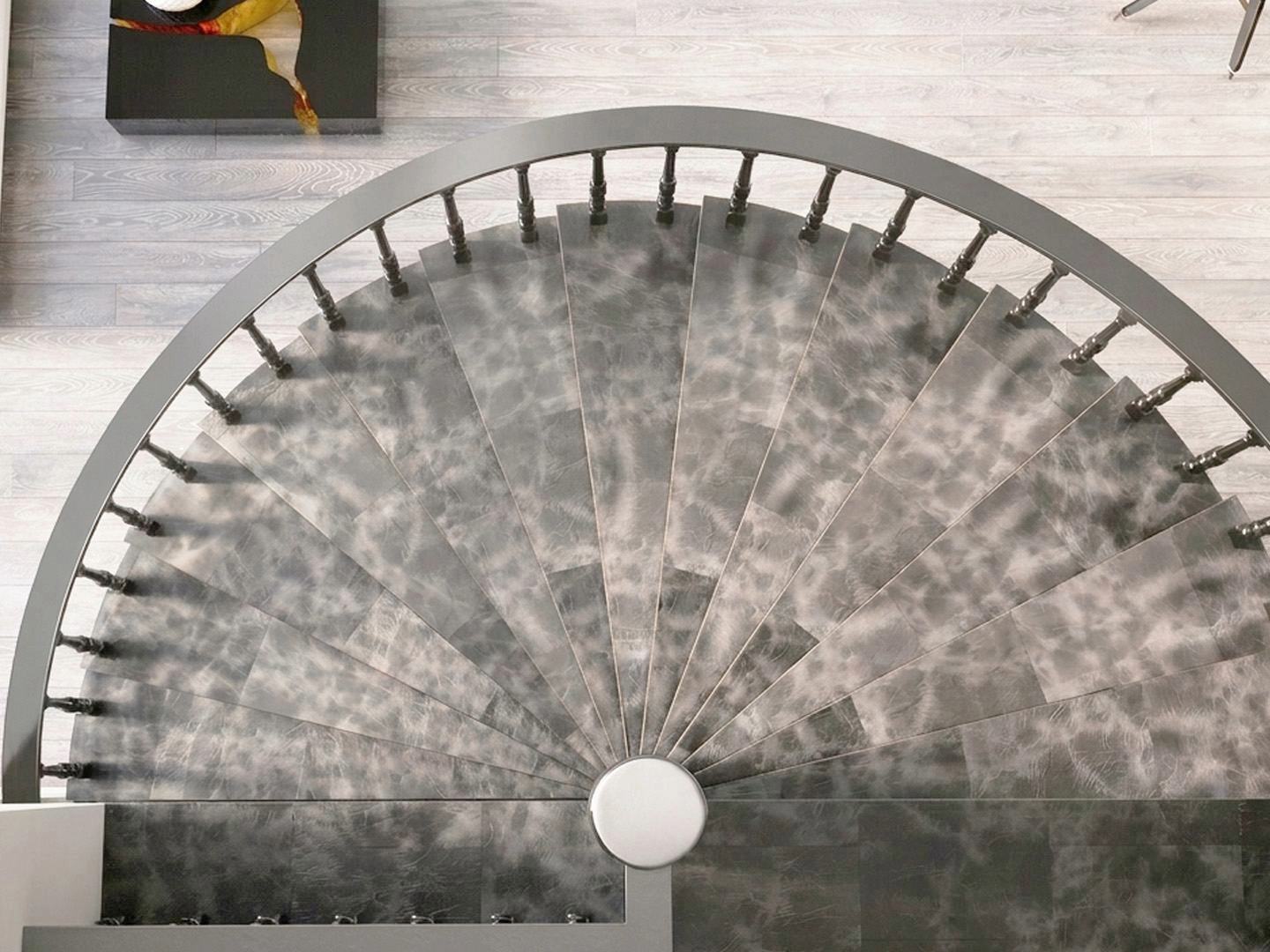


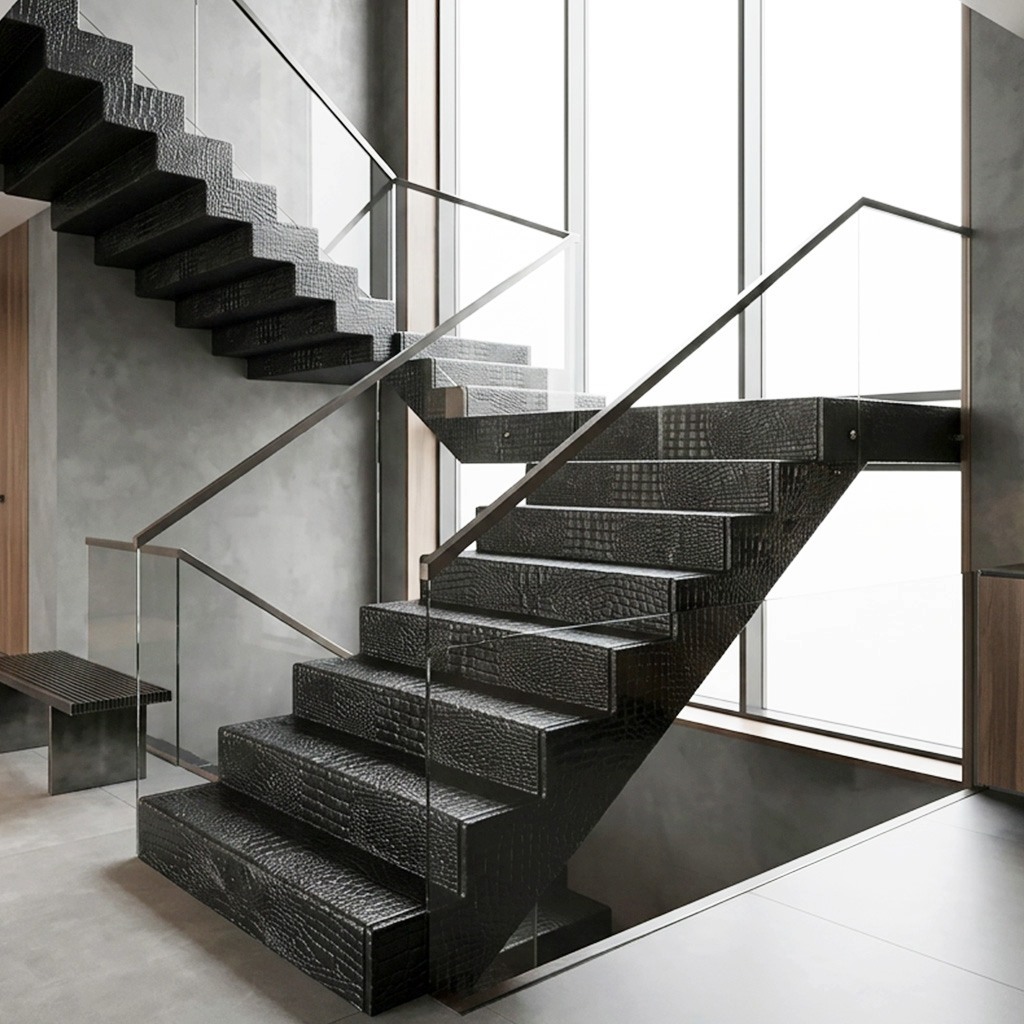
On a leather staircase, the treads, risers, and often the strings and handrail as well are covered in real leather. The material is cut to fit, bonded across the full surface, and finished at the edges — wrapped, rebated, or hand-stitched. What was a purely functional component becomes a piece of furniture, one that makes something of the move between two levels.
Where Leather Stair Treads Come Into Their Own
Why Leather on a Staircase?
| Property | Effect |
|---|---|
| Footfall noise | Steps are audibly softened — particularly noticeable on wooden and steel staircases |
| Grip | Textured leathers such as suede offer more hold than lacquered wood or natural stone |
| Renovation without demolition | Existing steps are reworked rather than replaced — quickly and with little dust |
| Patina | The surface matures with use and gains depth instead of wearing out |
| Design freedom | Color, grain, stitching, and edge detail can be combined freely |
Is a Leather Staircase Slippery?
Chosen correctly, no. The surface finish is what matters — lightly sanded or grained leathers give considerably more grip than smooth, polished ones. On staircases in heavy use, or in projects with higher requirements, a discreet edge profile is worth adding. Anyone walking barefoot or in socks will notice the difference from lacquered wood immediately. Where a specific slip-resistance class is required, we will confirm which leathers and finishes meet it for your project.
Will Leather Stand Up to the Wear on a Staircase?
Staircases are among the hardest-worked surfaces in a building, and the nosing takes most of it. That is why we do not use upholstery leather but heavy hide, tanned for floor use. The wear still shows: the first few centimeters darken and grow more supple. That is exactly the appeal — provided everyone agrees beforehand that a permanently flawless surface is not what leather does.
Where Leather Is the Wrong Choice
How Does the Work Proceed?
Unlike a flat floor area, every step is a one-off. For decorators, interior designers, and specialist contractors, this sequence has proved itself:
How Much Care Does a Leather Staircase Need?
Less than most people assume. Dust and grit should be removed regularly, because grains caught underfoot act like sandpaper. Mop damp, never wet — no steam cleaners, no aggressive products.
What Happens if a Step Is Damaged?
It is renewed on its own. Because each step is a separate unit, there is no need to strip the whole staircase or dismantle anything around it. Surface scratches can usually be closed up by re-oiling. For later repairs, it is worth keeping offcuts from the same batch of hides — leather ordered later rarely matches the color and grain exactly.
How Long Does a Leather Staircase Stay Looking Good?
With clean workmanship and occasional care, two decades and more is a realistic span, though heavily used steps will need reworking sooner than rarely used ones. Leather ages differently from lacquer or carpet: instead of going dull, it gains depth.
In Summary
A leather staircase combines precise craftsmanship with a detail guests notice first and residents feel every day. If you want to upgrade an existing staircase, or give a new one a character of its own, this solves acoustics, feel, and design at once — provided the measuring, the substrate, and the edge detail are right.